How much of the body your photo actually needs
Head and shoulders, waist up, or head to feet: the crop decision that matters more than almost anything else you choose. A short table by movement type, and the headroom mistake almost everyone makes once.
Before lighting, before the background, before which of the sixty one actions to pick, there is a simpler question that decides more results than any of them: how much of the person is actually in the photograph.
It sounds too obvious to be the answer, and that is exactly why it gets skipped. A photo can be sharp, well lit and perfectly posed and still be the wrong shape for the action you picked, because the crop stops short of whatever the action needs to move. A dance cannot use legs that were never photographed. A cap toss cannot throw a cap into space that does not exist above the head. The fix is not a better generation. It is knowing, before you choose the action, what that action needs to see.
The rule: match the crop to the movement
Every action in the library was built to move a specific part of a person, and it can only move what the photograph actually shows. A dance action needs the whole body because the movement lives in the hips, the knees and the feet as much as the arms. A wave needs almost none of that, because the movement lives in one hand and forearm, and everything else can stay still or even sit outside the frame.
This is the whole method, stated once: figure out where the movement in the action actually happens, and make sure your crop includes that part of the body with room to spare. Everything else, the outfit, the background, the pose, is secondary to this one measurement.
What each kind of movement needs
The table below is not exhaustive, every preset has its own note on its action page, but it holds for almost everything in the catalogue.
Full length, feet and floor visible. Dance actions like salsa, breakdance, ballet, hip hop and Bollywood, plus most of the sports and fitness group: running, jumping, boxing, a basketball dunk, yoga. The movement runs through the legs, so a photo that stops at the waist leaves the model nothing real to build the lower body from.
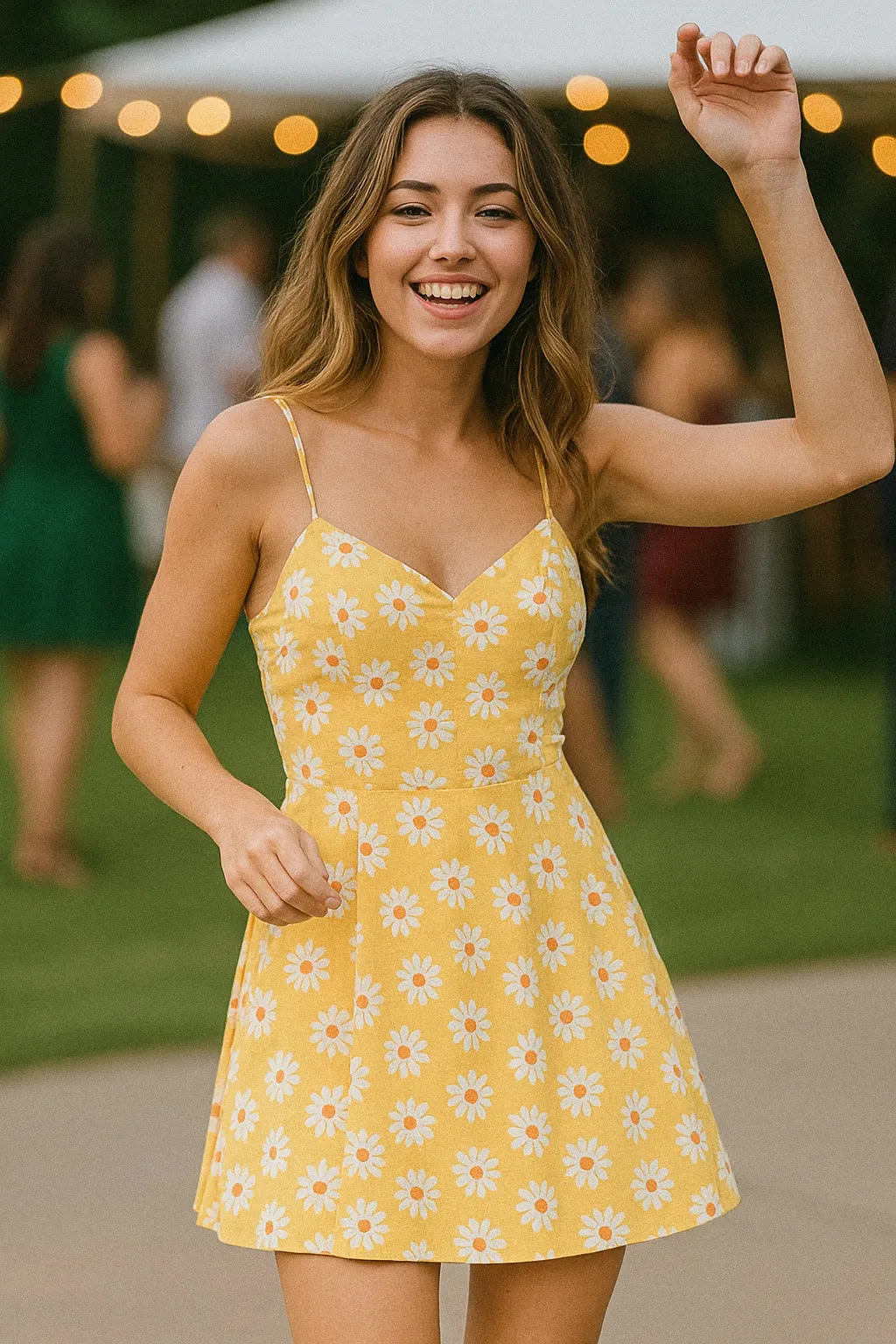
Full length or waist up with real headroom. The fashion actions, a runway walk, a dress twirl, a photoshoot pose, want the whole silhouette and shoes in frame. A few of the special and seasonal actions sit here too, which is worth its own section below.
Waist up, hands in frame. The musical actions, guitar, piano, drums, and most of the everyday group, cooking, reading, working at a laptop. The hands carry the movement, so they need to be visible and clear of the torso, but legs and feet are not doing anything the clip needs to show.
Chest up or head and shoulders. The expression actions, laughing, waving, surprised, a peace sign, cheering. These are the smallest movements in the library and the ones that hold a likeness best, and they want the face large in the frame rather than lost in a full body shot. A tight crop is correct here, not a compromise.
A selfie at arm’s length. The landmark and epic encounter actions replace the background around you, so what they need is a clean, well lit face rather than a particular body crop at all.
Headroom is the thing people forget
Once the crop is wide enough for the movement, there is a second measurement that almost nobody checks: how much empty space sits above the head. Anything that travels upward during the clip needs somewhere to go, and a photo where the head is already near the top edge gives it nowhere.
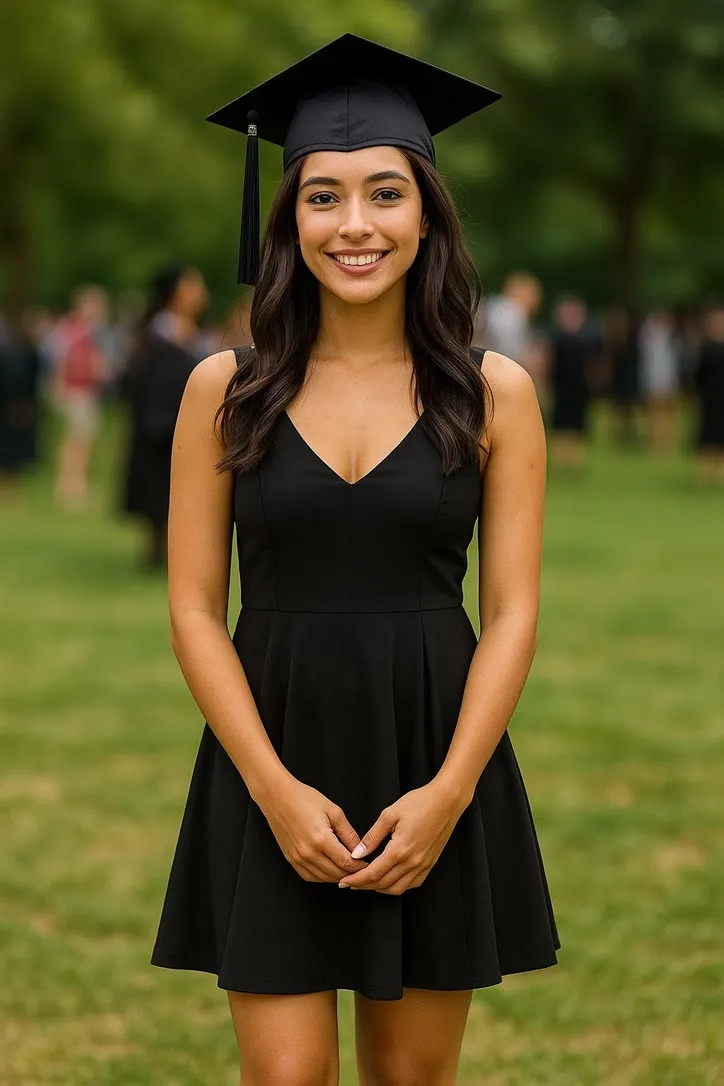
Graduation toss is the clearest example of this in the whole catalogue. The cap has to leave the frame entirely, thrown up and out, and a photograph with the mortarboard sitting a few pixels from the top edge has no room for that to happen convincingly. A full length shot with genuine sky or background above the head gives the throw somewhere real to land, or rather, somewhere real to leave from. The same problem shows up smaller in celebrating, where the arms go up, and in confetti throw, where the confetti falls from above the frame rather than the subject.
The fix costs nothing at the point you take the photo. Stand back a little further than feels necessary, or crop the file a little looser than instinct suggests, and leave a clear band of space above the head for anything that is about to move into it.
Why less is sometimes the better choice
It is tempting to think a wider photograph is always the safer bet, since it includes more of what any given action might need. In practice the opposite is often true. A face that fills a quarter of a full length photograph is a small, low resolution version of the thing every expression action depends on most. Laughing built from a distant full body shot has less to work with than the same action built from a head and shoulders portrait, even though the full body photo technically shows more of the person.
The rule is not wider is better, it is match the crop to what moves. A dance needs the legs and gets nothing extra from a tightly cropped face it was never going to use. An expression needs the face and gets nothing from legs and feet sitting unused at the bottom of the frame. Photographing the same person twice, once close and once from further back, and keeping both files, is a genuinely useful habit if you plan to try more than one kind of action.
A quick check before you commit to an action
Look at the action you are considering and ask what part of the body actually moves in it. If the answer is mostly hands and a face, a chest up photograph is enough and probably better than a wider one. If the answer includes the hips, the knees or the feet, nothing shorter than full length will do, no matter how sharp or well lit the rest of the photograph is. And if anything in the description travels upward, a cap, raised arms, falling confetti, check that there is real space above the head before you commit to that file.
This single check, done in a few seconds before you upload anything, rules out more disappointing results than adjusting light or resolution ever will. It is worth doing first, because everything else about a photograph is easier to fix than a crop that simply never included what the action needed to move.
The clip itself is generated from that one frame rather than filmed, so it is an illustration of the movement rather than a record of it, and the crop is the single biggest factor in how convincing that illustration ends up looking.
For the fuller method, covering light, background and the face itself alongside the crop, see choosing a photo that will animate well. And if the milestone photo you are working from is a graduation or a first birthday specifically, graduation, new baby, and the milestone photo goes through those cases in more detail than there is room for here.
Common questions
- What crop does a dance action need?
- Full length, with the feet and some floor visible. Salsa, breakdance, ballet, hip hop and Bollywood all move through the legs and hips as much as the arms, so a photo cropped at the waist or chest has nothing there for the model to move.
- Do the small expression actions need a full length photo?
- No, and a full length photo is usually the wrong choice for them. Waving, laughing, surprised and the other expression actions want the face large in the frame, which means head and shoulders or a chest up crop. A face that is small in a full body shot animates worse, not better.
- Why do I need headroom above the head for some actions?
- Anything that leaves the top of the frame during the clip, a thrown graduation cap, raised arms in a cheer, falling confetti, needs somewhere to travel. A tight crop with the head near the top edge gives it nowhere to go, and the result looks cramped or cut off.
- What crop is safest if I am not sure which action I want yet?
- Waist up, front on, with the hands visible and some space above the head. It is not the ideal crop for every action, but it is the one that rules out the fewest options, and it is enough for most of the expression, everyday and party actions in the library.