Saying it's AI: why labelling a generated clip makes it land better
Nobody is checking your homework before you post a generated clip, so the real question is not compliance, it's whether the people watching know what they're looking at. What platforms currently ask for, and why saying it works in your favour.
Nobody checks your homework before you post a clip made from a photograph. There is no form to fill in, no gate that stops an unlabelled video from going out. So the question people actually mean when they ask “do I have to label this” is narrower than it sounds: will anything bad happen if I don’t, and does it matter if I do. The honest answer is that almost nothing enforces it for an ordinary personal post, and it is worth doing anyway, because it changes how the clip gets received.
What the platforms currently ask for
Since the wave of generative AI tools that arrived through 2023 and 2024, the major platforms have each added some form of synthetic media disclosure. Meta’s apps, Instagram and Facebook, apply an “AI info” label to content carrying AI-editing metadata and also let you flag it yourself when you post. TikTok has a toggle for AI-generated content in its upload flow, introduced in 2023 and expanded since. YouTube has asked creators to disclose “altered or synthetic” content that could be mistaken for real since 2024, with its own labelling step in the upload process.
None of that is written here as a fixed reference, because it should not be treated as one. These policies have changed more than once already and will change again. The reliable move is to look at the posting flow in front of you right now, on whichever app you are actually using, rather than trust a list that was accurate the month it was written. What stays true underneath all of it is the shape of the ask: platforms want AI generated content flagged as AI generated content, and most of them have made that a couple of taps rather than a form.
The social argument is the stronger one
The compliance case for labelling a clip is thin for most of what you will ever post with this app. The social case is not. A joke that tells you it is a joke lands better than one you have to work out on your own, and a generated clip is, almost always, a kind of joke: an invented moment, offered as a gift or a laugh, not as evidence of anything.
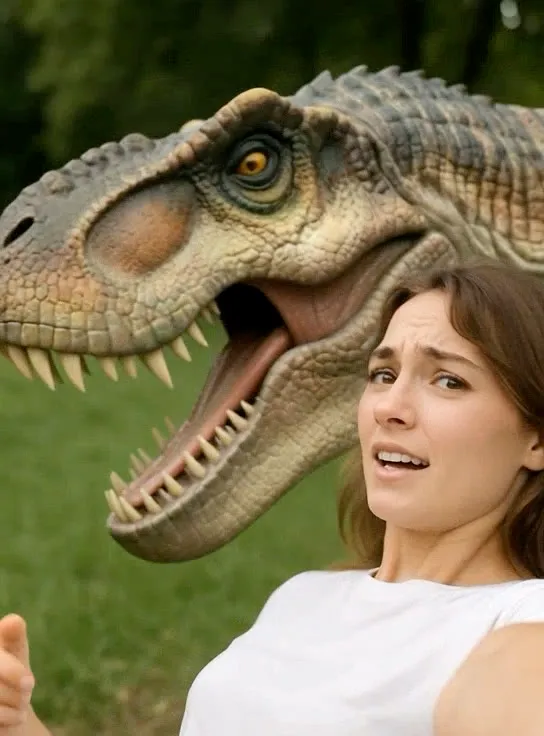
Look at the two ends of the library to see why. The Dinosaur Encounter action puts an enormous invented creature behind someone in a safari truck, and the Lion Encounter Selfie does something similar with a lion at close range. Nobody watching either clip for more than a second thinks it is real footage. The premise announces itself. A caption saying “made with AI” on a clip like that is barely doing any work, because the clip has already done it. These are the same instinct that makes the landmark selfie actions fun rather than confusing: everyone involved already knows the Eiffel Tower was never actually behind that camera.
The clips that need the label are the quiet ones, not the loud ones.
The photograph that could pass for real
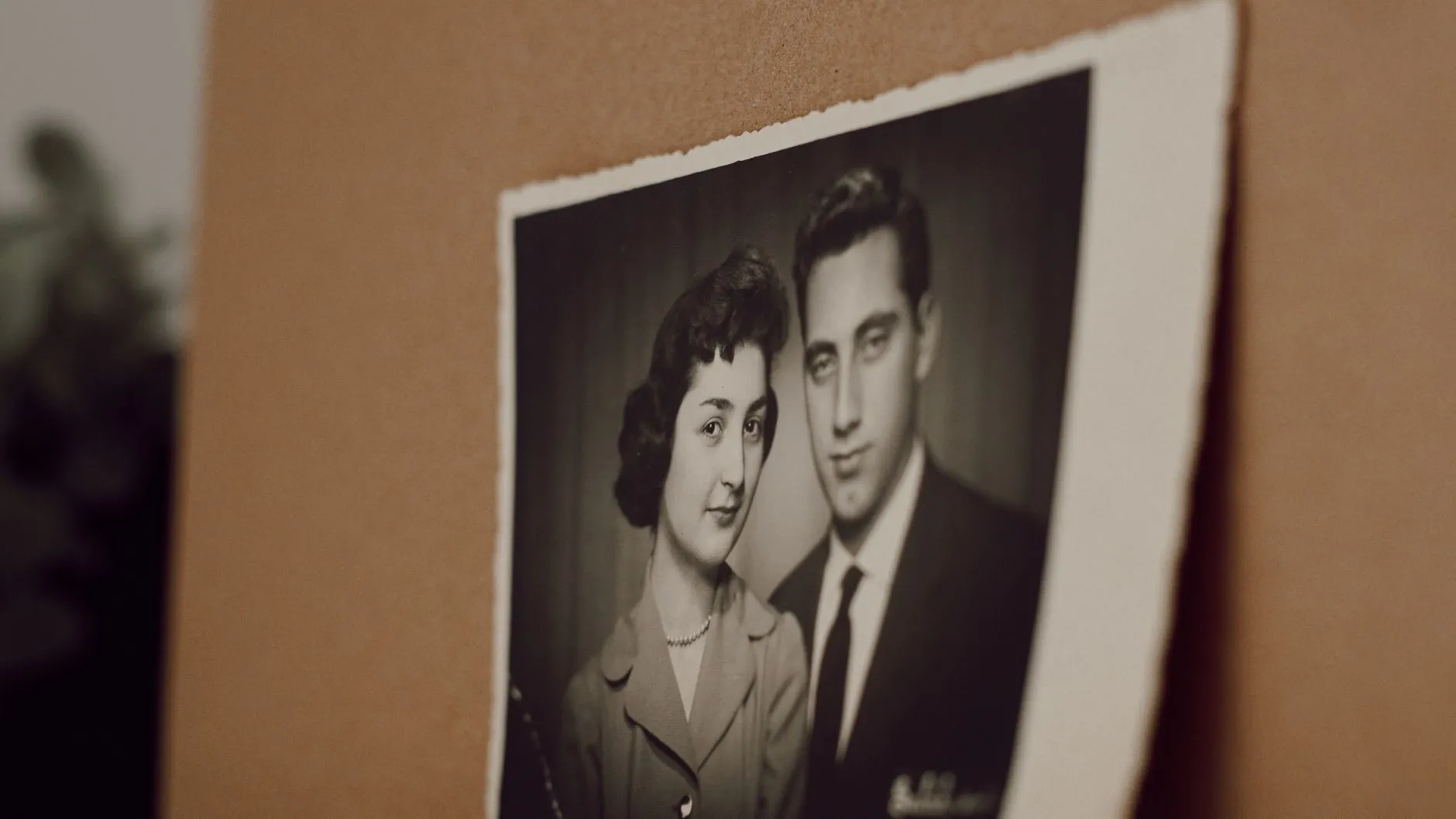
Here is the case that actually matters: an old photograph of a parent or grandparent, animated into a small wave or a smile, sent into a family group chat without comment. Nobody in that thread is expecting a generated clip. Several of them may not know this kind of tool exists. The most likely reaction to five seconds of someone they recognise moving, with no caption explaining what it is, is a genuine moment of believing old film has turned up somewhere, followed by the much stranger moment of being told it has not.
That is not a disaster, and it is usually followed by a laugh once the explanation lands. But it is a worse version of the same clip than the one that arrives with “look what I made from Dad’s old photo” already attached. The surprise of realising something is fake is a different feeling from being told something is a fun fake upfront, even when the clip itself is identical. One is a small trick. The other is a small gift. The label, or just a sentence of context in the message, is what decides which one you sent.
This is the same logic covered from the other side in asking permission before you animate someone: the people in a clip, and the people watching it, generally deserve to know what they are looking at before they react to it, not after.
How to actually do it
You do not need the platform’s official toggle for this to work. A sentence in the caption or the message does the same job and travels further, because it survives being reposted, screenshotted, or forwarded into a chat where the original post’s metadata is long gone. “Made this with an AI video app” at the start of a caption costs nothing and removes all the ambiguity in one line. For anything posted somewhere public, using the platform’s own label as well is worth the extra tap, since it is the version that survives if your caption gets cropped off in a reshare.
The one place this gets genuinely awkward is a clip sent with no caption at all, dropped straight into a thread. If you are not going to write anything, lead with the context verbally or in a follow up message rather than letting the clip speak first. “Wait till you see what I made from this old photo” takes five seconds to type and changes the whole shape of what happens next.
The honest version of what you are labelling
A generated clip is built from a single still frame. The model invents the motion around it rather than recording anything that actually happened, which is the entire reason a label matters in the first place: if the clip looked exactly like what a camera would have captured, nobody would need telling. It does not, not quite, and the gap between a photograph and five seconds of invented movement is precisely the thing worth naming before someone else notices it on their own.
If you are deciding which photograph to animate in the first place, choosing a photo that will animate well covers the craft side of that decision in more depth than fits here.
Common questions
- Am I legally required to label an AI generated video before I post it?
- For an ordinary personal post, almost never. The rules that exist are mostly about political advertising and commercial claims, not a photo you animated for a birthday card. The platform-level labelling that applies to everyone is a different thing from a legal requirement, and it is worth telling the two apart.
- Do Instagram, Facebook, TikTok and YouTube actually require an AI label?
- Since 2024 the major platforms have built in some form of synthetic or AI-generated media disclosure, either automatic through file metadata or a toggle you select when you post. The exact mechanics shift often enough that the honest answer is to check the posting flow you are using right now rather than trust a list written months ago.
- Why would I label a clip if nobody is making me?
- Because it changes how the clip is received, for the better. A viewer who is told upfront that something is generated watches it as a joke or a gift, the way it was intended. A viewer who has to work that out on their own, or finds out later, remembers the moment they felt fooled, not the moment they smiled.
- Does an obviously fake clip, like a dinosaur in a selfie, still need a label?
- Less urgently than a clip that could pass for real, but it rarely hurts. The genuinely risky case is a clip that looks plausible, an old family photo that seems to move on its own, not one with a dinosaur in it.