Animating a photo where the face is turned away, or in profile
Past a certain angle, the model is not reading a face anymore, it is guessing one. Where that line sits, which actions do not care, and when the honest answer is a different photograph.
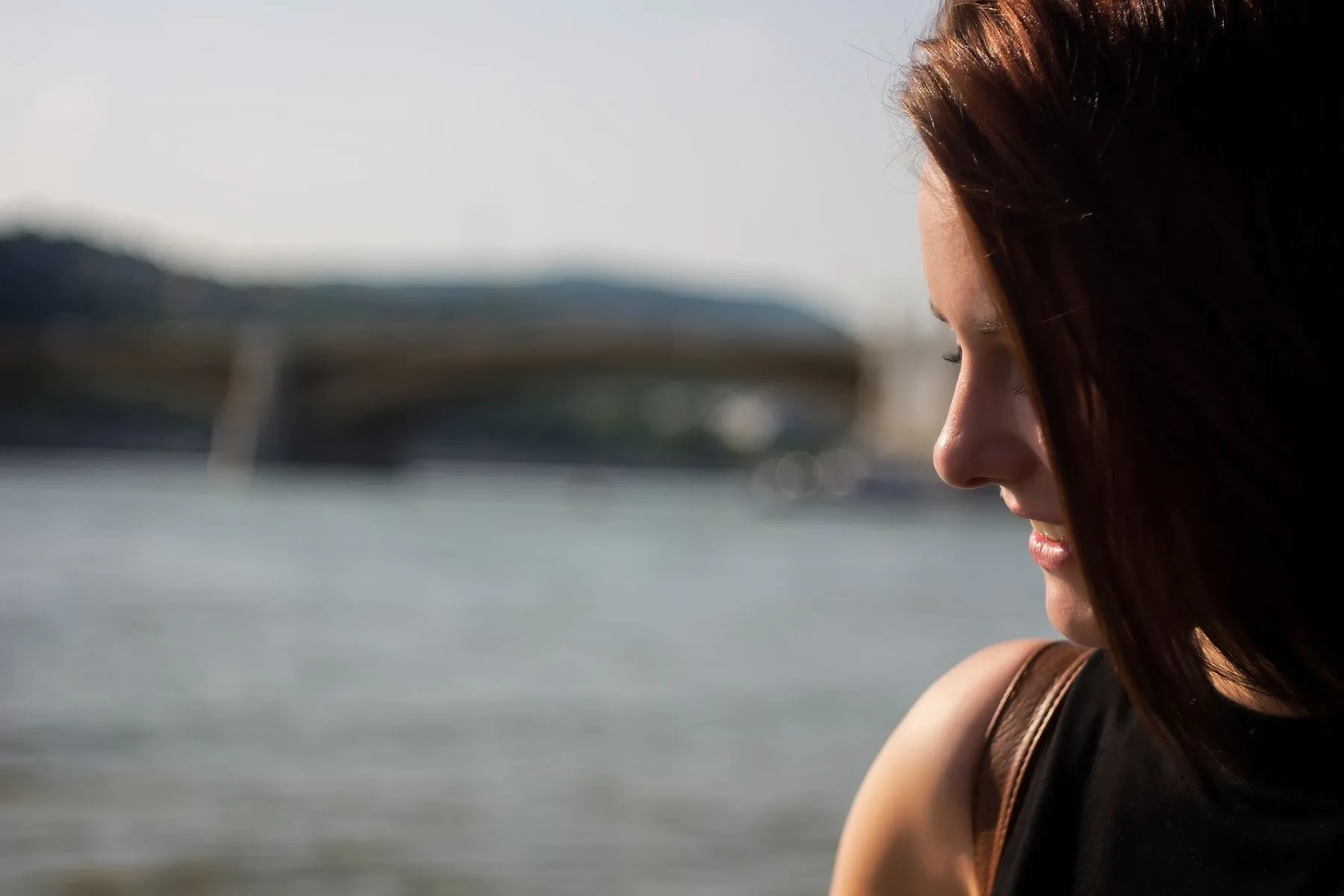
Some photographs are turned photographs on purpose. A candid glance to the side, a profile caught in good light, a look back over a shoulder, these are often the better picture. They are not always the better source file. Once a face turns past a certain point, the model is no longer reading it, it is guessing at the half it cannot see, and the result shows that guess.
The three-quarter rule
Up to roughly three quarters, a face still gives the model both eyes, the bridge of the nose, and enough of the far cheek to work out its shape. Past that point, one eye is gone, most of the far side of the face is gone with it, and whatever the model puts there is invention rather than reading. This is the same line the site’s own craft notes draw for lighting and framing: past three quarters turned, the animation tends to drift in a way that is hard to name but easy to notice once you know to look for it.
It is worth being precise about what “turned” means here, because two different things get called the same word. A head turned to the side while the shoulders stay square to the camera, the way someone glances at something off frame, is the case this rule is really about. A true profile, shot side-on on purpose, is the extreme end of the same problem rather than a different one. Both remove information the model would otherwise have.
What the model loses when a face turns
A front-on face gives the model a face it can move in either direction: it can turn the head left, right, tilt it, widen the eyes, all from a starting point that already shows the whole shape. A profile gives it only the visible half. Anything the action asks the far side of the face to do, whether that is opening an eye that was never in the photograph or shaping an expression across a cheek the model never saw, is generated without a reference for what that side of this specific person actually looks like.
This is different from a resolution problem or a lighting problem, both of which are covered in the full method for choosing a photo that will animate well. A sharp, well lit profile is still a profile. No amount of image quality puts back an eye the camera never captured.
Actions where the face barely matters
Not every action is built around the face, and the ones that are not care far less about this problem. Running is a clean example: it is a full-body, front-on movement where the face occupies a small part of the frame and the motion is happening in the arms, legs, and torso. A head turned to the side in the source photograph barely changes what the model has to build, because it was never asked to build much from the face to begin with.
Photoshoot pose sits in a similar place. It is built around the body’s silhouette across a sequence of poses, and while an evenly lit, front-on face still gives the cleanest result, a photograph shot at a slight angle is a minor variation on the action rather than a mismatch with it. If the photograph you have is turned and the action you want does not live and die by the face, it is worth trying before ruling it out.
Actions built entirely on the face
The other end of the library is honest about the opposite case. Surprised and the rest of the expression actions are close to nothing but a face: the whole clip is an expression changing, so the whole clip depends on the model reading that face correctly in the first place. A profile going into an expression action is asking for the hardest version of the exact problem this article is about, on the action that has the least room to absorb it.
The practical test is simple. If the action’s own page describes a close, front-on portrait as what it wants, a turned face is not a small compromise, it is a mismatch with what the action is built to do.
The honest recommendation
If the action depends on the face and the only photograph available is turned past three quarters, the honest answer is a different photograph, not a different attempt at the same one. This is not a limitation that a better setting or a second try reliably fixes, because the problem is what the camera captured, not what the app does with it afterwards. It is worth saying plainly rather than dressing it up: some photographs are the wrong input for some actions, and a profile shot heading into an expression action is one of the clearer cases of that.
What is worth trying, if the profile photograph is the one that matters, is matching it to an action that was never going to lean on the face in the first place. A body-led action gives a turned head somewhere to be that is not the centre of the problem.
Said plainly
The model works from one still frame and invents everything it did not see in that frame. A profile removes about half the face from what it has to work with, and the actions that ask the most of the face are the ones that feel that loss the most. Matching the photograph to an action that does not depend on the face sidesteps the problem entirely, and for anything that does depend on it, a front-on photograph is worth more than any setting in the app.
The full crop, light, and framing checklist is in choosing a photo that will animate well, which covers the rest of what makes a photograph a good starting point before you spend a generation on it.
Common questions
- Can you animate a photo where the face is in profile?
- You can try it, and for some actions it works fine, but for anything built around an expression the result usually drifts away from the person in the photograph. The model needs to see enough of the face to read its shape, and a true side-on profile gives it roughly half of what a front-on photo would.
- What counts as too far turned?
- A useful rule of thumb is three quarters. Up to that point the model can still see both eyes and the general shape of the face. Past it, one eye and a good part of the far cheek are gone, and the model is inventing them rather than reading them.
- Does it matter for every action, or just some?
- It matters most for expressions and close portraits, where the face is most of the frame. It matters much less for full-body actions like running or a dance, where the face is a small part of a much larger picture and a turned head barely changes what the model has to build.
- If my only photo has the face turned away, is there anything I can do?
- Check whether the action you want actually needs the face at all. A lot of the library is built around the body, not the face, and those actions are far more forgiving of an angle that would ruin an expression. If the action does depend on the face, the honest answer is a different photograph rather than a different setting.