The fashion actions, and the photograph each one actually needs
Runway Walk, Dress Twirl, Photoshoot Pose and Sunglasses Style all live in the same category, but they ask for two completely different crops. Which two want the whole outfit, which two are happy close in, and the one with a catch.
The Fashion & Glam category looks like one thing from the outside: four presets about looking good on camera. Runway Walk, Dress Twirl, Photoshoot Pose and Sunglasses Style get reached for as a set, usually on whatever photo is already open. That is where most of the disappointment in this category comes from, because the four do not actually want the same photograph. Two of them need your whole outfit in frame. Two of them would rather you came in close.
What the four have in common
Before the split, the one thing that is true across all four: your outfit is treated as fixed material, not something the model improvises around. The clothing you are wearing in the source photo, down to the fabric, is what shows up in the clip. That is different from the encounter or landmark actions, which build an entire new scene and keep only your face. Here, the scene changes but the clothes do not, which is exactly why the category exists. It is a way to put a specific outfit in motion, not a way to try on a different one.
That also means picking a sharp, well-lit photo matters more than usual here. A wrinkle, a loose thread or a muddy colour in your actual photo is what ends up moving in the clip. There is no wardrobe department upstream of this one.
Runway Walk and Dress Twirl want the whole outfit
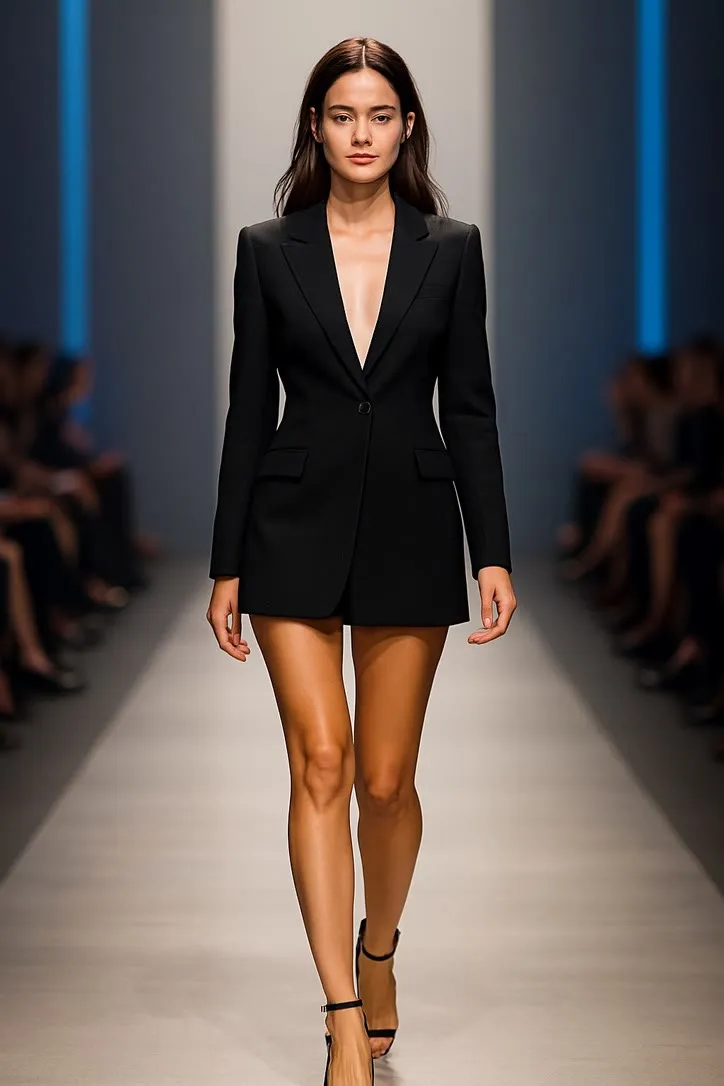
Runway Walk puts you walking toward the camera down a catwalk, one stride at a time, ending in a half turn. Dress Twirl spins you once on the spot so a skirt or dress lifts and flares before settling back down. Both need legs in motion and, for the twirl specifically, a hem that actually has somewhere to go. A photo cropped at the waist gives either action nothing to walk or swing with, the same problem the dance actions run into for the same structural reason: the part of the body the motion depends on was never photographed.
Shoes belong in the frame for Runway Walk specifically. The walk is shot low and wide, heading straight at the camera, which means the feet are doing a good share of the visible work. A photo cropped through the ankle is the single easiest way to undercut this one, and it is worth checking for before anything else, since everything else about the photo can be good and this one detail still costs you the result.
Dress Twirl is a little more forgiving on the crop line, because the lift happens in the skirt rather than at the feet, but it still needs the hem visible and some space around the body for the fabric to have room to flare into. A dress or skirt with actual weight and drape to it, rather than something stiff or very fitted, gives the turn more to work with once it starts moving.
Photoshoot Pose and Sunglasses Style are happy close in
Photoshoot Pose is a studio-style sequence, a shoulder drop and a chin turn into the light, then a weight shift into a second pose. It is framed as a medium shot against a plain background, not a full body shot, which means a clean waist-up or chest-up photo is exactly what it wants, not a compromise version of what a full length photo would have given it.
Sunglasses Style sits even closer. The motion is a single hand rising into frame to push the glasses back up the nose, then a level stare into the light. Nothing below the chest ever matters here. What matters is the face being clear, the light being even, and the hand having a little room to move without crossing out of frame on its way up.
Of the four, these two are the pair that most people’s existing photos can already serve. An ordinary good portrait is close to what either of these wants. Runway Walk and Dress Twirl ask for a photo most camera rolls genuinely do not have on hand: full length, good light, nothing crowding the feet.
The catch in Sunglasses Style
This one is worth being specific about, because it is easy to assume the action invents a pair of sunglasses for you the way a filter would. It does not. The animation is built as an adjustment, a hand pushing glasses that are already on your face back up the bridge of the nose. That only makes sense starting from a photo where you are already wearing them. A photo without sunglasses gives the action a hand with nothing to adjust, and the result shows it. If the idea is sunglasses in the finished clip and the source photo does not have them, this is not the preset that gets you there.
Why the background matters less here than usual
Three of the four effectively build their own setting around you rather than keeping yours. Runway Walk puts you on a catwalk under hard overhead light. Photoshoot Pose puts you against a plain studio backdrop. Dress Twirl and Sunglasses Style both lean on an outdoor scene rather than whatever room the photo was actually taken in. That does not mean your real background is irrelevant, a plain, uncluttered original still gives the model an easier time separating you from it, but you are not fighting the same background smear problem a full body turn against your own patterned wallpaper would cause. The model has less reason to try to keep your actual room, because it was already planning to replace it.
Said plainly
Every one of these four is the model inventing a short, plausible continuation from one still frame, a walk, a turn, a pose, a hand reaching for a pair of glasses, not a record of you actually doing any of it. Match the crop to the one you pick rather than reaching for whichever photo is already open, and the gap between what you expected and what comes back closes considerably. For the broader version of this same idea across the rest of the library, choosing a photo that will animate well covers the crop and light rules this category inherits from.
Common questions
- Do all the fashion actions need a full length photo?
- No, and treating them as one group is the easiest mistake to make. Runway Walk and Dress Twirl both need the whole outfit and the floor underneath it. Photoshoot Pose and Sunglasses Style are built as a closer shot, waist up is enough, and a full length photo does not help either of them.
- Which of the four is the easiest to get a good result from?
- Photoshoot Pose and Sunglasses Style, mostly because the crop they need is the one most people already have. A clear waist-up or chest-up photo with good light is common. A full length shot with the shoes in frame and nothing cluttered on the floor is rarer, which is what makes Runway Walk and Dress Twirl the harder pair.
- Does Sunglasses Style put sunglasses on me if I am not wearing any?
- It is built as an adjustment, not an invention. The motion is a hand raising to push a pair back up the nose, which only makes sense starting from a photo where you are already wearing them. Start from a photo without sunglasses and the action has nothing to adjust.
- Does the background behind me matter for these four actions?
- Less than it does for a dance or sports action, because three of the four effectively build their own setting around you, a runway floor, a studio backdrop, an outdoor scene. A plain, uncluttered original still helps the model separate you from whatever is behind you, but you are not fighting the same background-smear problem a full body turn in your own living room would cause.