Sunglasses, hats, and a face half covered: does it still animate?
A dark lens takes more out of a face than people expect, and a hat is a different problem entirely. Which occlusions matter, and which actions barely notice them.
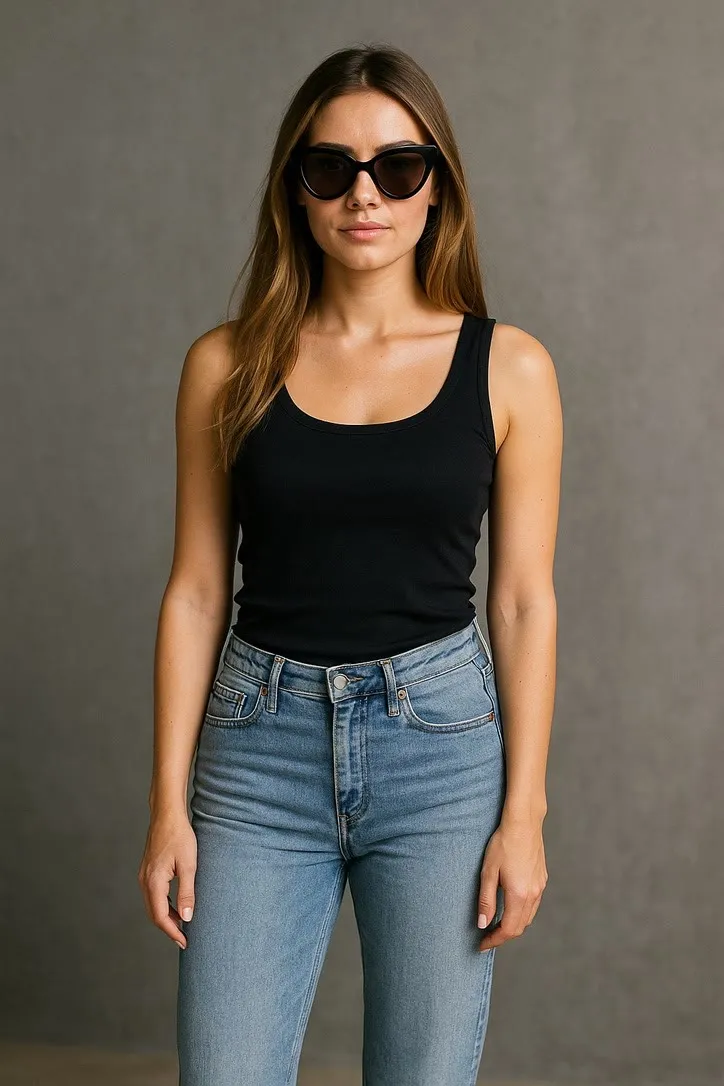
A pair of sunglasses, a low cap, a hand caught mid-gesture across the mouth. None of these ruin a photograph. All three change what the model has to work with, and by different amounts depending on what you are asking it to do. The short version is that occlusion is close to fatal for anything built around an expression, and close to irrelevant for anything built around the body. The rest of this is about telling those two cases apart before you spend a generation finding out the hard way.
Why the eyes carry more than people expect
An expression is mostly a small set of muscles around the eyes and mouth moving in a specific, readable way. Take the mouth away and a face can still read as happy, surprised, or amused, because the eyes are doing a lot of that work on their own. Take the eyes away, which is exactly what a dark lens does, and the model loses the part of the face it relies on most to build a convincing expression from.
This is not a guess about how the model works internally, it is a plain observation about what a dark lens removes from a photograph. Two eyes and the skin around them are gone, replaced by a flat, reflective surface with no expression information in it at all. Ask an action to build surprise from that and the model is inventing the eyes underneath the lenses from nothing, on the one part of the face the whole action depends on.
The split that decides it
The useful question is not “does this photo have sunglasses or a hat in it,” it is “does the action I want live in the face or in the body.” That split does most of the work.
Face-led actions, the small expression changes like laughing, surprise, or a peace sign, ask the model to build something specific and legible out of a small part of the frame. Anything covering the eyes takes away the exact material those actions need, and there is very little for the model to substitute it with.
Whole-body actions are a different story. Skateboarding is a clean example: the motion is in the knees, the arms, the tilt of the board and the body, and the face occupies a small share of a much bigger picture. Sunglasses on that photograph are close to a non-issue, because the action was never depending on reading an expression in the first place. The same is true of most of the sports, dance, and travel categories, where the face is present but not doing the heavy lifting.
Sunglasses are a special case, not just an occlusion
It is worth separating one action from the rest of this article, because it inverts the whole problem. Sunglasses Style is built around a hand reaching up and adjusting the glasses, so a photograph with sunglasses already on is not a compromised input, it is the correct one. This is the one place on the site where the thing that would sink an expression action is exactly what the action is asking for. If you have a good sunglasses photo and were assuming it was off the table for animation, this is worth trying first.
Hats and brims are a different problem from lenses
A hat is not the same kind of occlusion as a lens, and it is worth treating separately. A cap or beanie that sits close to the head and covers hair rather than face is a minor thing. It removes a little context around the top of the face and nothing else, and most actions barely notice.
The harder case is a hat with a brim, especially a wide one that shades the eyes without fully hiding them. A lens is static: it is a flat surface that does not move differently from the face beneath it. A brim is not. It has to move plausibly along with the head, the light under it has to behave correctly as the person moves, and the edge of it against the face is a place the model can easily get wrong in a way a viewer notices immediately, even if they cannot say exactly why. A brim that shifts oddly against the forehead or a shadow line that does not track the movement is a more common failure than outright hiding the eyes.
What to do about it
If the action depends on the face and the sunglasses, hat, or hand across the mouth are covering the part it needs, the straightforward fix is a different photograph rather than a different setting in the app. Trying the same covered photo again does not change what the model can see in it. A quick portrait with the glasses off, taken front on in even light, will do more for the result than any retry.
If the action is built around the body, this is largely a non-issue and not worth spending time on. Check the action’s own page for what it is actually built around before assuming a hat or a pair of sunglasses is a problem at all, since the majority of the library is not asking anything of the eyes to begin with.
Said plainly
The model works from one still frame and builds everything else from what it can see in that frame. Cover the eyes on an action built around an expression and you have taken away the part it needed most. Cover the eyes on an action built around a body in motion and you have barely changed the input at all. Knowing which kind of action you are reaching for is most of the decision here, and it is worth checking before rather than after.
For the rest of what makes a photograph a good starting point, from crop through to lighting, choosing a photo that will animate well covers the full method.
Common questions
- Can you animate a photo of someone wearing sunglasses?
- Yes, and for a lot of actions it barely matters, especially anything built around the body rather than the face. Where it does matter is any expression action, because a dark lens removes the eyes, and the eyes carry more of an expression than most people expect.
- Does a hat ruin an animated photo?
- Usually not, and it can even help. A hat that sits still on the head is a minor occlusion. The complication is a hat with a brim or a wide edge, because it has to move convincingly along with everything else in the clip, and that is a harder thing for the model to get right than a hat that just sits there.
- Which actions handle a covered face best?
- Full-body and whole-scene actions, since the face is a small part of a much larger picture. Sunglasses Style is a specific case worth knowing, since it is built around the glasses rather than despite them.
- What if the action I want needs the eyes and my only photo has sunglasses on?
- Take the sunglasses off for a portrait rather than editing them out of the photo you have. It is the shorter path to a photograph the model can actually use, and it avoids the artefacts that come from painting out an object in an image editor.