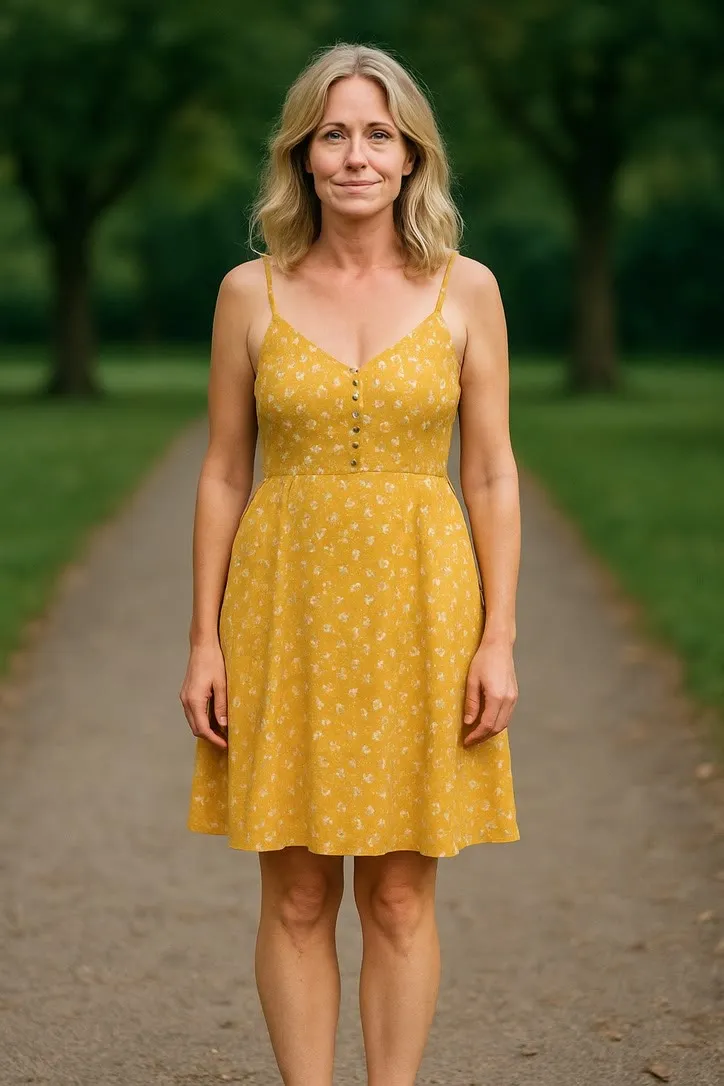
A moving photo for Mother's Day or Father's Day
The photograph that makes the best Mother's Day or Father's Day clip is rarely the posed portrait. What to pick instead, which action actually reads as a gift, and how to hand it over so the still stays the real present.

The photograph that gets chosen for a Mother’s Day or Father’s Day gift is, almost without fail, the wrong one. Someone picks the newest portrait on the phone, usually a posed holiday photo with a tight crop and a stiff smile, because it feels like the nicest picture available. It is rarely the one worth animating.
The photo that actually works
The better choice is nearly always a photo of your parent doing something, not posing for something. Stirring a pot, laughing at something off camera, sitting on the back step with a dog or a grandchild. These photographs already have a reason to move, which is most of what the craft comes down to.
A posed portrait asks the model to invent a gesture from nothing. A candid shot of your mother mid laugh, or your father halfway through saying something at the barbecue, gives it a starting point that is already there in the face. The result holds together better and looks less like a stranger wearing your parent’s features.
Two things matter more than how recent or how flattering the photo is:
- The face is a real size in the frame. Chest up or closer. A wide shot of the whole family at a table rarely has enough resolution on any one face to animate well.
- The light falls evenly on the face. Outdoor shade or a window beats a flash photo or a dim restaurant every time, because the model is working from whatever the camera actually recorded.
If the best candidate is an older print rather than something on a phone, that changes the order of operations but not the choice. A photo with a crease or a colour cast carries that damage into every frame the model generates. Scan it, repair it, then animate the repaired file rather than the print photographed on a table. Our sister site covers how to repair a damaged print properly before it goes anywhere near an animation.
Small movements read as a gift, large ones read as a trick
The instinct is to pick something impressive. Resist it. A parent’s face is the entire point of this gift, and the actions that keep the most of a likeness are the quiet ones.
Waving is close to foolproof. It needs very little from the photograph beyond a clear, front on face, and it reads immediately as a greeting rather than a performance.
Laughing works best on a photo where there is already warmth in the expression. It will not invent delight from a neutral or tired face convincingly, so start with a picture where something was genuinely funny.
Cooking is worth calling out on its own, because it is one of the few actions in the library built around an ordinary, recognisable moment rather than a performance or a costume. If your mother or father is often found in a kitchen, a photo taken there, chopping, stirring, plating up, gives this action something true to work with rather than something it has to invent from scratch.
What to leave alone: anything that spins, dances or travels across the frame. Those actions ask the model to reconstruct a whole moving body, and the further it has to invent, the further the result drifts from the person your parent actually is. Run whichever small action you pick twice. Each generation is independent, and the two attempts usually differ enough that one is clearly the better keeper.
Handing it over
The clip earns its place as a nice extra. It should not be asked to carry the whole gift on its own.
Print the photograph and give that. A good print, in a frame or just in an envelope, is the object they keep on a shelf. The animation is something they watch once or twice and then mostly remember having seen, which is a different and smaller kind of value.
Show it to them yourself, on a decent screen. Do not text a video file and leave them to work out how to open it. Sit with them, hand over the phone, and let the surprise happen while you are there to see it.
One clip, not several. A single five second animation of a photograph they already love is a genuine moment. Three or four clips stitched together with music starts to feel like a production, and a production is a different gift than this one.
Say what it is, once, plainly. It is a generated illustration of movement made from a single still photograph, not footage that exists anywhere else. One sentence covers it, said before they watch rather than after, and the honesty tends to make the surprise land better rather than worse.
One honest limit
The model is inventing motion from one frame, not recovering anything, so treat the result as an illustration of your parent rather than a record of them doing that exact thing. It is usually a lovely illustration. It is still worth knowing what it is before you call it something else.
If the photo you want to animate is a wedding portrait or an anniversary photo rather than a candid, the anniversary gift guide covers that case specifically, including what formal portraits are missing that candid shots usually have.
Common questions
- What photo should I animate for Mother's Day or Father's Day?
- Usually not the most recent studio portrait. A photo of your parent doing something ordinary, cooking, gardening, sitting with a grandchild, tends to animate better and mean more than a formal headshot, because the action already fits something they actually do.
- Which action actually suits this gift?
- A small one. Waving, laughing or cooking hold a likeness closely and read as a warm, personal gesture rather than a performance. Anything that travels across the frame or needs the full body asks the model to invent more than a parent's face can comfortably survive.
- Is the clip the actual gift?
- Better to treat it as the extra. Print the photograph, give that, and let the clip be the thing they discover afterwards, on a phone, once, with you standing next to them.
- Can I animate an old photo of my parents with me as a kid?
- Often yes, and it is usually the better photo than anything recent, provided the original is sharp enough and the faces are a reasonable size in the frame. If the print has faded or creased, repair it before you animate it rather than after.